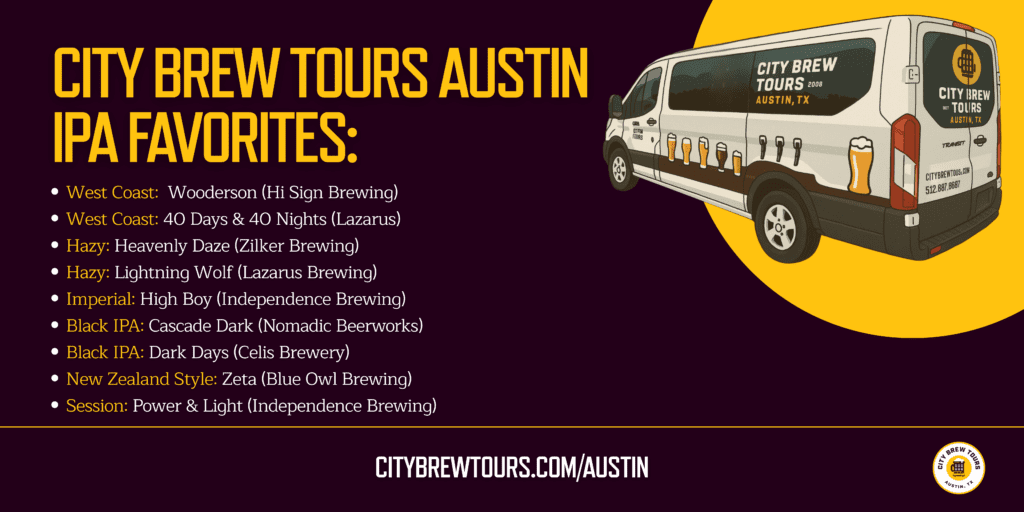





Learn how IPA evolved and brew a podium-ready West Coast IPA – then book City Brew Tours Austin to taste it fresh at the source.
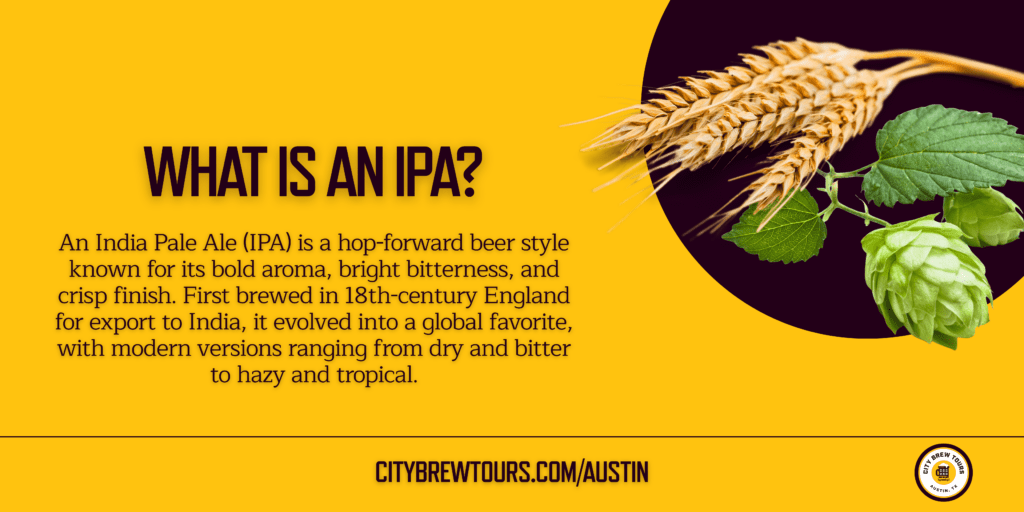
What Is an IPA?
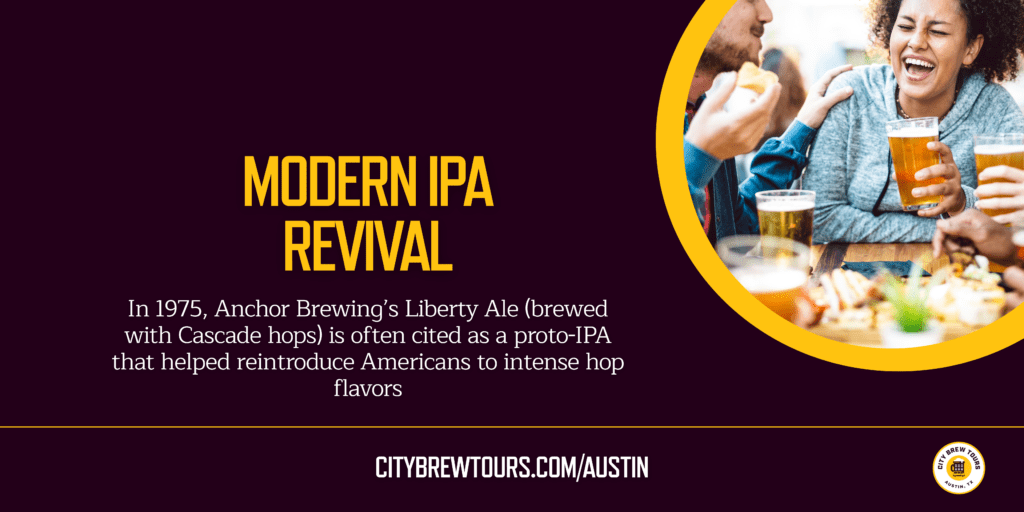
The term “India Pale Ale” emerged from export-bound pale ales brewed in Britain in the late 18th to early 19th centuries. London’s Bow Brewery shipped highly attenuated, hop-forward pale ales to East India Company outposts; by the 1830s, Burton-on-Trent breweries like Bass and Allsopp, leveraging sulfate-rich water that sharpened bitterness, dominated the trade.
Historians debate how much the voyage itself drove hopping rates versus market preference, but Burton’s attenuation and water profile were decisive. American craft brewers reinterpreted IPA in the late 20th century with domestic hops and cleaner fermentations, creating a broad family of modern substyles.
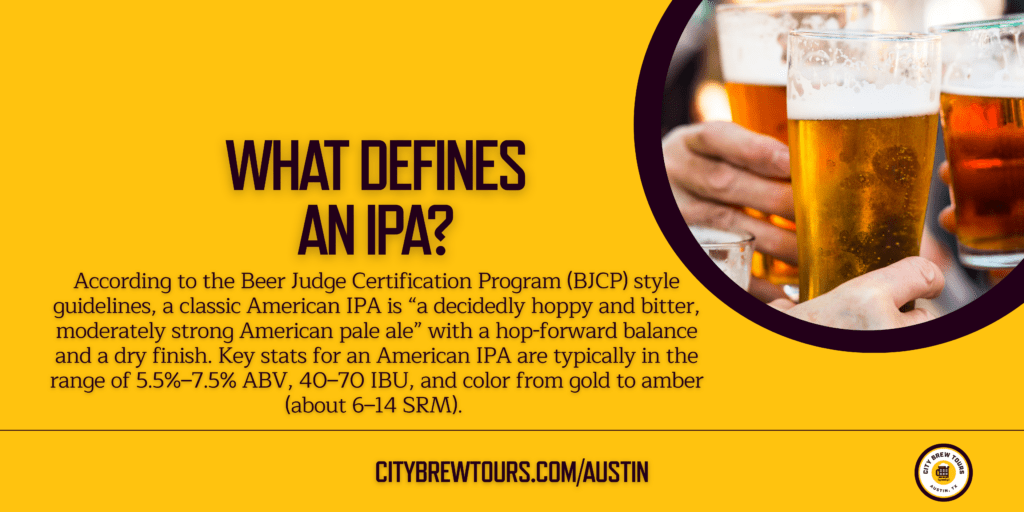
BJCP Style Guidelines: American IPA
The Beer Judge Certification Program (BJCP) defines style targets used in competitions. American IPA (Category 21A) remains the anchor: high hop aroma and flavor, clean fermentation, lean malt backbone, pronounced bitterness, and a dry to medium-dry finish. Hazy IPA is separately defined with saturated hop aroma, low perceived bitterness, and a soft, silky mouthfeel. Specialty IPAs such as Black IPA require declaring the base style and balancing roast with hop expression.
West Coast IPA: The Modern Definition
Today’s West Coast IPA pours clear to brilliant, finishes dry, and showcases assertive bitterness with resin, pine, citrus, and dank notes. It is typically crystal-free or very low crystal, relies on highly attenuative yeast and sulfate-forward water, and uses late and whirlpool hops for saturated aroma. Careful oxygen control from whirlpool to glass preserves brightness.
Home Brew Recipe: DANKY TANKY West Coast IPA (5 gal)
| Style target | BJCP 21A American IPA |
|---|---|
| Batch size (post-boil) | 5.0 gal / 19.0 L |
| Brewhouse efficiency | 70% |
| OG | 1.066 |
| FG | 1.010 |
| ABV | ~7.3% |
| IBU | ~68 (Tinseth) |
| SRM | ~6 |
| Boil | 60 minutes |
What sets this IPA apart?
Columbus provides the dank, resinous spine while Mosaic adds modern berry and citrus. A sulfate-forward profile, lean crystal-free grist, modern hop timing, and oxygen-smart handling deliver brilliant clarity, clean bitterness, and a crisp finish that judges reward.
Grist Bill
- 10.0 lb American 2-Row
- 1.0 lb Vienna malt
- 0.5 lb Carafoam (option: substitute 0.5 lb wheat malt if you are confident in fining and cold-side O₂ control)
- 0.5 lb Dextrose, add with 10 minutes left in boil
Target mash pH 5.2-5.4 (room temp).
Water Profile (RO or soft base)
- Ca ~120 ppm
- Mg 8 ppm
- Na 15 ppm
- SO42- ~240 ppm
- Cl– ~60 ppm
Mash Schedule
- 149-150°F for 60 minutes
- Mash out 168°F for 10 minutes
- Sparge to ~6.5 gal pre-boil
Hop Schedule (adjust to actual AA%)
- 60 min: Columbus to reach 38-40 IBU of the total
- 5 min: Mosaic 1.0 oz (28 g)
- Whirlpool 165-170°F for 15-20 min: Columbus 1.0 oz (28 g) + Mosaic 2.0 oz (57 g)
Dry Hop – short, cold contact (total 5.0-5.5 oz / 142-156 g)
- Day 2-3 of active fermentation, 36-48 h at ~60°F: Mosaic 2.0 oz (57 g) + Columbus 0.5 oz (14 g)
- Post-FG, 36-48 h at ~60°F: Mosaic 2.0 oz (57 g) + Columbus 0.5-1.0 oz (14-28 g)
Yeast & Fermentation
SafAle US-05 (2 × 11.5 g) or WLP001/WY1056/Imperial A07. Oxygenate with pure O₂ for 45-60 seconds at ~1 L/min through a sintered stone, or 8-10 minutes with filtered air. Pitch at 64-66°F. Hold 65-66°F for 72 hours, then ramp to 68-70°F until terminal. Cold crash hard. Fine as desired. Closed-transfer to keg and carbonate to 2.4-2.6 vols CO2.
BJCP Judge’s Snapshot (21A)
- Aroma: high hop aroma – dank pine, resin, citrus with light berry; very low malt; no diacetyl.
- Appearance: pale gold to light amber; bright clarity; white head.
- Flavor: high, clean bitterness; lean malt; dry finish; no harsh astringency.
- Mouthfeel: medium-light body; medium-high carbonation.
IPA Sub styles at a Glance
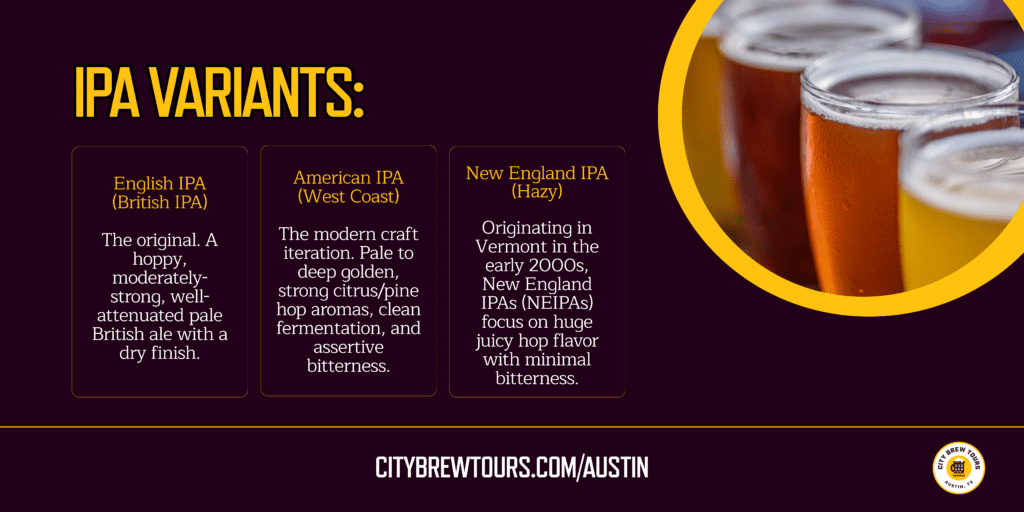
- American IPA (21A): clear, bitter, hop-saturated; dry finish; clean fermentation.
- Hazy/New England IPA: saturated hop aroma and flavor, low perceived bitterness, soft mouthfeel; haze is intentional and should be smooth.
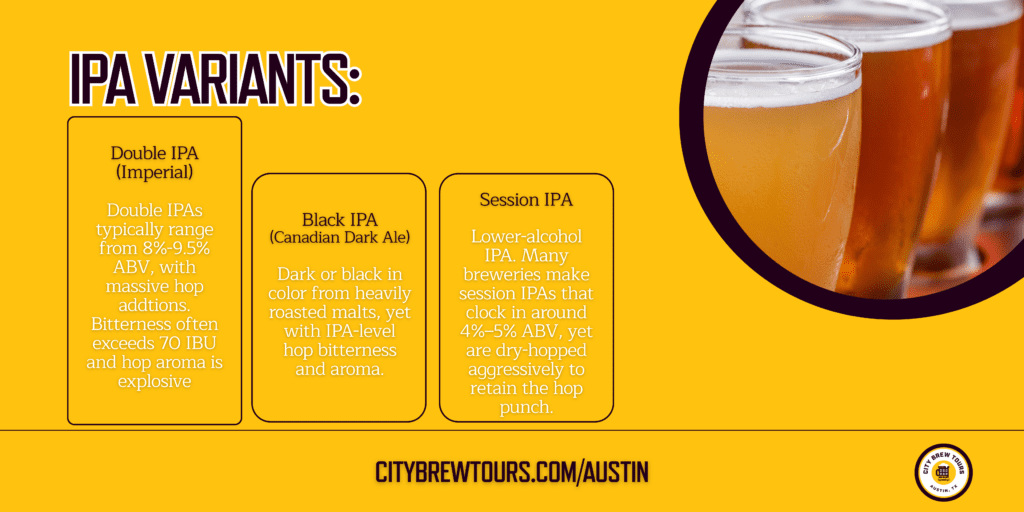
- Black IPA: hop-forward with restrained roast; finish stays dry rather than stout-like.
- Imperial/Double IPA: higher gravity and intensity; bitterness must remain clean and integrated.
- Session IPA: lower ABV with assertive late/dry hopping to retain flavor.
Pro Tips for Medaling with West Coast IPA
- Keep sulfate notably higher than chloride for snap and dryness.
- Build clean early bittering, lean on short 165-170°F whirlpools for saturated aroma, and keep dry hops short and cold.
- Pitch healthy yeast, oxygenate, and ferment cool and steady.
- Protect from oxygen: purge, closed-transfer, serve fresh.
- Recalculate IBUs with your software including whirlpool assumptions and serving losses.
- Present brilliant clarity; judges reward crisp, clean bitterness.
Ready to Taste World-Class IPAs in Austin?
Reading is good. Tasting is better. Book City Brew Tours Austin for a VIP, behind-the-scenes experience with fresh pours, brewer access, and round-trip transportation. Seats go quickly – reserve your tour now.